Screen Print vs DTG vs DTF: Which Print Method Is Best?
Administrator · · 5 min read
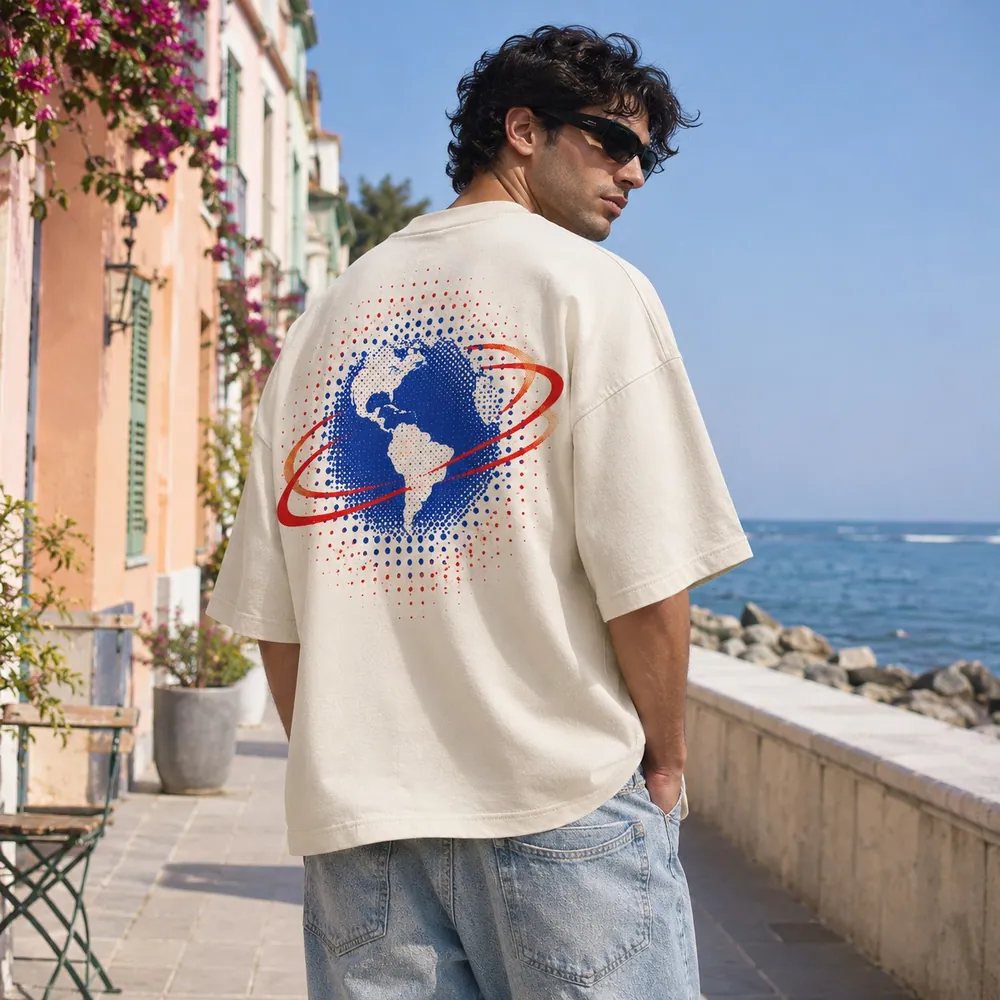
Choosing between screen print vs DTG vs DTF is one of the first production decisions a clothing brand makes, and it affects more than looks. The print method you pick shapes how long your graphics last, how bright they look, what you pay per piece and how easily you can scale from a first drop to a full collection.
In this guide we compare the three most common apparel printing methods on the four factors brand owners ask us about most: durability, print vibrancy, price and bulk production. Prefer to watch? This guide goes with our short Reel on the same topic.
Screen Print vs DTG vs DTF at a Glance
| Factor | Screen Printing | DTF Printing | DTG Printing |
|---|---|---|---|
| Durability | Excellent | Good | Good (when properly processed) |
| Print vibrancy | Excellent | Excellent | Very good |
| Price | Higher setup, low per piece in bulk | Low setup, good for small designs | Higher per piece |
| Bulk production | Excellent | Good | Less economical |
| Best for | Bulk orders and bold graphics | Smaller orders and flexible quantities | Detailed artwork in smaller runs |
These are general guidelines. Real results always depend on the ink, the garment material, curing and the quality of production.
Screen Printing: Best for Bulk Production
How screen printing works
In screen printing, ink is pushed through a prepared mesh screen onto the fabric with a squeegee. Each colour in the design generally needs its own screen, and the print is then cured so the ink bonds with the garment.
Durability and vibrancy
Screen printing lays down a solid layer of ink, which gives bold, vibrant colours and excellent durability when the print is produced and cured correctly. This is why it is the classic choice for streetwear graphics, team merchandise and logo-led designs.
Price and bulk production
Because screens must be prepared before printing starts, setup costs are higher than with digital methods. Once the screens are ready, though, each extra piece is fast to print, so the price per piece becomes very economical in bulk. Screen printing suits designs with a limited number of solid colours that you plan to produce in volume.
- Choose it for: larger production runs, bold logos and graphics, repeat best-sellers.
- Think twice if: you need very small quantities or artwork with many colours and gradients.
DTF Printing: Best for Smaller Orders
How DTF printing works
DTF stands for direct-to-film. The design is printed onto a special transfer film, coated with adhesive powder and cured. The film is then placed on the garment and transferred with a heat press, and the film is peeled away to leave the print on the fabric.
Durability and vibrancy
DTF produces vibrant, full-colour prints and handles detailed, multi-colour artwork well. Durability is good, and the method works on a range of fabrics, including cotton and polyester blends. Large DTF prints can feel slightly thicker on the garment than other methods.
Price and bulk production
DTF has low setup costs because no screens are needed, which makes it attractive for smaller orders, sampling and designs with lots of colours. For large volumes, per-piece costs can add up compared with screen printing.
- Choose it for: small batches, colourful artwork, mixed fabrics, testing new designs.
- Think twice if: you are producing the same design in high volume.
DTG Printing: Best for Detailed Prints
How DTG printing works
DTG stands for direct-to-garment. Instead of using a film or screen, specialised inkjet technology prints ink directly into the garment. Garments are usually pretreated before printing and cured afterwards.
Durability and vibrancy
DTG is excellent for fine detail, gradients and photographic designs, giving very good vibrancy. Durability is good when the garment is properly pretreated and cured. DTG is particularly well suited to cotton garments.
Price and bulk production
DTG needs little setup per design, but its per-piece cost is generally higher, which makes it less economical for large production runs. It works best for detailed artwork in smaller quantities.
- Choose it for: photographic or highly detailed artwork on cotton, small runs.
- Think twice if: you need the lowest per-piece price at volume.
Which Print Method Should Your Brand Choose?
There is no single best printing method for every job. Use this quick rule of thumb:
- Bulk orders and bold graphics: screen printing.
- Smaller orders and flexible quantities: DTF printing.
- Detailed prints and gradients: DTG printing.
Then check four questions before you decide:
- How many pieces do you need? The larger the run, the more screen printing pays off.
- How many colours are in your artwork? Many colours and gradients point towards DTF or DTG.
- What fabric are you printing on? DTG is best on cotton. DTF works across a wider range of fabrics.
- What is your budget per piece? Compare setup cost against unit cost at your real order quantity.
Many brands combine methods, for example screen printing a core logo tee in volume while using DTF for a limited, colourful capsule.
Test Your Print Before Bulk Production
Whatever method you choose, approve a sample first. At Tribon Sports, every order goes through a pre-production sample, so you can check fit, print, embroidery and finish before cutting, printing and sewing begin for the full order. Learn more in our sampling process guide.
Explore print-ready blanks such as our custom oversized t-shirts and oversized hoodies, see all decoration options on our custom branding page, or mock up your idea in the design studio. For more garment construction tips, read single vs double needle collar stitching explained.
Frequently Asked Questions
Is screen printing more durable than DTG?
Screen printing generally offers excellent durability, while DTG offers good durability when garments are properly pretreated and cured. Ink, fabric and production quality all affect the final result.
Is DTF cheaper than screen printing?
For small orders, DTF is often more economical because it has lower setup costs. For large orders of the same design, screen printing usually has the lower price per piece.
What is the difference between DTF and DTG?
DTF prints the design onto a transfer film that is heat-pressed onto the garment. DTG prints ink directly into the garment with an inkjet printer.
Which print method is best for a new clothing brand?
It depends on your quantities, artwork and budget. Many new brands start with DTF or DTG for small runs and move to screen printing once a design sells in volume.
Get a Quote for Your Next Printed Collection
Tribon Sports is a custom and private label apparel manufacturer in Sialkot, Pakistan, manufacturing since 2001 and exporting since 2014. We produce streetwear, sportswear and teamwear, workwear and more for brands around the world. Pricing depends on product, fabric, GSM, decoration, quantity and packaging, so see our pricing page or request a quote and tell us about your design.
screen printingDTF printingDTG printingcustom brandingstreetwear