Custom Work Uniforms: Embroidery, Patches or Print?
Administrator · · 6 min read
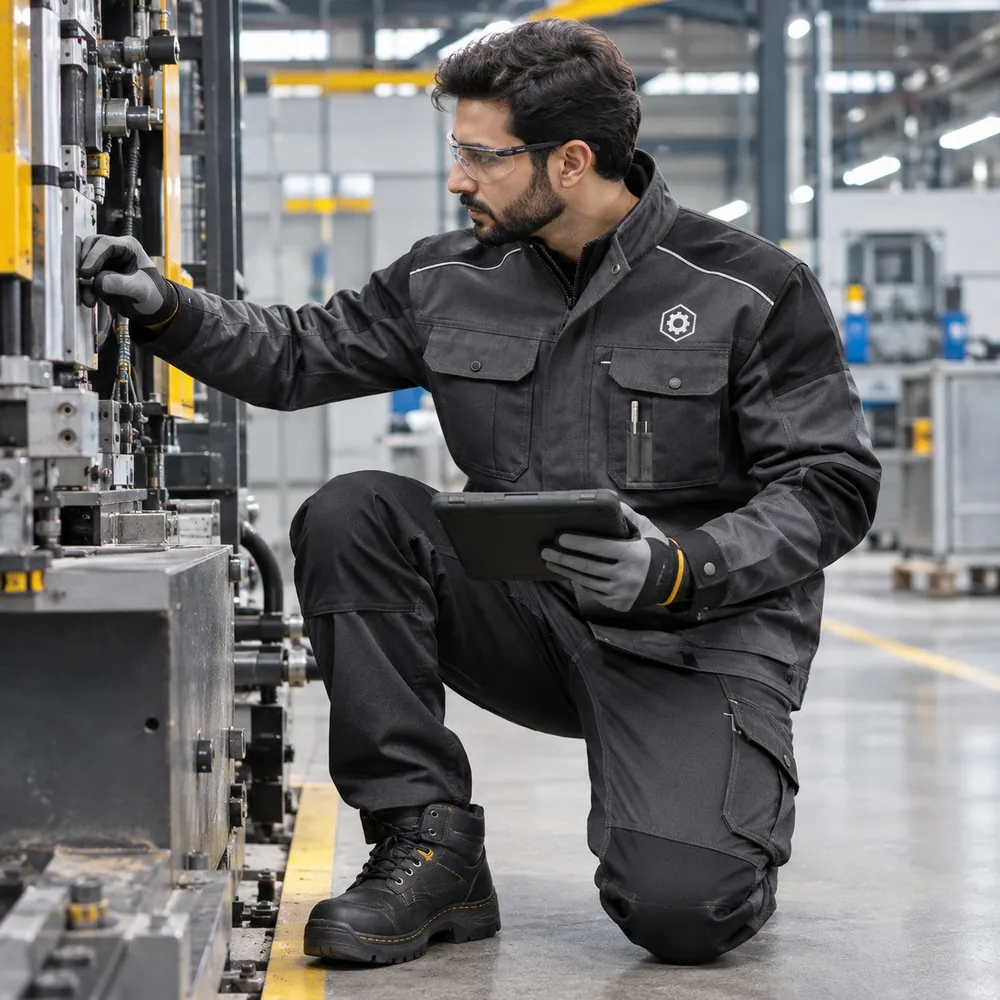
Your crew's uniform is often the first thing a customer sees. When a technician arrives on site or a driver steps out of a van, the logo on their chest does the introducing. That makes the way you brand custom work uniforms more than a design detail: it affects how professional your team looks, how long the garments last and how much you spend replacing them.
The challenge is that workwear lives a harder life than almost any other clothing. It is washed hot and often, rubbed against tools and harnesses, splashed with oil and paint, and worn in rain and sun. A decoration method that looks great on a fashion tee can crack, peel or fade within months on a work jacket. In this guide we compare the four main options — embroidery, patches, screen print and heat transfer — and show where each one works best.
Why Branding Matters on Custom Work Uniforms
Before choosing a method, it helps to be clear on what the logo needs to do:
- Build trust: customers let uniformed, clearly identified staff into homes, offices and sites more readily.
- Identify teams on site: on busy projects, company names and role labels help supervisors see who is who.
- Market the business: every jacket on the street or the job site is a small, moving advert.
- Survive the job: a logo that fades or peels sends the opposite message.
The right method balances all four against your garment type, fabric and budget.
Option 1: Embroidery
Embroidery stitches your logo directly into the fabric with thread. It is the classic choice for workwear and corporate uniforms, and it is one of the core decoration services on our workwear manufacturing line.
Best for
- Work jackets, softshells and fleece
- Polo shirts and corporate uniforms
- Caps and heavier twill or canvas garments
Pros
- Very durable through repeated industrial washing
- Premium, raised look that reads as "professional"
- Does not crack or peel
Watch-outs
- Fine text and very small details can blur — keep lettering bold and simple
- Large back logos add stitch count, weight and cost
- Not ideal on very thin or stretchy fabrics, or directly on reflective tape
Option 2: Patches (Embroidered, Woven or PVC)
Patches are made separately and then sewn (or attached with hook-and-loop) onto the garment. They are popular on coveralls, mechanic uniforms and heavy-duty work jackets.
Best for
- Thick fabrics where direct embroidery is difficult
- Name patches that change from worker to worker
- Rugged, industrial branding with a strong outline
Pros
- Extremely hard-wearing and easy to replace
- Hook-and-loop patches let you reissue garments to new staff
- Woven patches capture finer detail than direct embroidery
Watch-outs
- Adds a sewing step to each garment
- Edges can snag if placed where tools or harnesses rub
Option 3: Screen Printing
Screen printing pushes ink through a mesh stencil onto the fabric. It is efficient for large runs and big logos, especially on cotton-rich garments.
Best for
- Large back prints on jackets and shirts
- Bulk orders of tees and lighter uniforms
- Bold, simple logos with few colours
Pros
- Cost-effective per piece on larger quantities
- Large print areas without the weight of embroidery
- Strong, opaque colour
Watch-outs
- Each colour needs its own screen, so multi-colour logos cost more to set up
- Can crack over time on heavily flexed areas
- Coated or water-repellent fabrics may need special inks
Option 4: Heat Transfer and Reflective Prints
Heat transfers are printed on a film and pressed onto the garment. They are useful on technical fabrics and for reflective or high-visibility branding.
Best for
- Hi-vis safety vests and hi-vis jackets
- Polyester, nylon and softshell fabrics
- Full-colour logos and individual names or numbers
Pros
- Works on fabrics where embroidery would pucker or damage coatings
- Reflective transfers boost visibility in low light
- Handles gradients and fine detail well
Watch-outs
- Lower abrasion resistance than embroidery on heavy-use areas
- On certified hi-vis garments, decorations must not cover required areas of fluorescent background or reflective tape — check the standard your market requires (for example EN ISO 20471 in Europe or ANSI/ISEA 107 in the US)
Quick Comparison: Which Method Fits Which Garment?
| Garment | Recommended method | Why |
|---|---|---|
| Work jackets | Embroidery chest, print or patch on back | Durable front logo, lighter large back logo |
| Coveralls | Patches or embroidery | Heavy fabric and frequent industrial washing |
| Work pants | Small embroidery or woven label | Keeps knees and pockets free for reinforcement |
| Hi-vis vests and jackets | Heat transfer / reflective print | Protects fluorescent and reflective areas |
| Polo shirts | Embroidery | Clean corporate look that lasts |
Logo Placement Tips for Workwear
- Left chest: the standard spot for company logos on jackets, polos and coveralls.
- Back yoke or full back: best for visibility on job sites — keep it clear of reflective tape lines.
- Sleeve: good for secondary marks such as certifications, departments or flags.
- Avoid high-wear zones: knees, tool pockets and harness contact points destroy decorations fast.
- Plan around features: reflective tape, zips, pocket flaps and reinforced panels all limit where a logo can sit.
A Buyer Checklist Before You Order
- Define the job conditions — indoor, outdoor, oily, wet or high-visibility?
- Pick the garments — jackets, work pants, coveralls, vests, polos or a full industrial uniform set.
- Prepare vector artwork (AI, EPS, PDF or SVG) and your brand colour references.
- Choose decoration per garment using the table above.
- Confirm placements and sizes on a mock-up — our Design Studio helps you visualise them.
- Approve a sample before bulk so you can check fit, colour and logo quality in real life.
- Agree packing — by size, by worker name or by department.
How Tribon Sports Produces Branded Workwear
Tribon Sports has been manufacturing apparel in Sialkot, Pakistan since 2001 and exporting since 2014, supplying businesses, contractors and workwear brands in the US, UK and Europe. Our workwear range covers industrial work jackets, cargo work trousers, coveralls, construction uniforms, hi-vis vests and jackets, mechanic uniforms and workwear polos, with options such as reflective tape placement, reinforced knees, tool pockets, hi-visibility colours and corporate logo embroidery.
Every order follows the same process: we review your artwork and specification, source fabric to your requirements, make a pre-production sample for your approval, then move to bulk manufacturing, quality control and international shipping. Pricing is quoted per order based on product, fabric, decoration, quantity and packaging — see our pricing page for how it works.
FAQ: Branding Custom Work Uniforms
What is the most durable way to brand work uniforms?
Embroidery and sewn patches are generally the most durable, because the logo is stitched rather than bonded to the surface. They handle frequent hot washing and abrasion well.
Can you embroider on hi-vis garments?
It is possible on some hi-vis fabrics, but heat transfers are often preferred. Whichever method you use, keep logos off the reflective tape and within the limits of the safety standard you need to meet.
Can each worker's name be added?
Yes — names can be embroidered, printed or added as patches. Hook-and-loop name patches are handy when garments are reissued to new staff.
What artwork do I need to send?
A vector file (AI, EPS, PDF or SVG) is ideal. If you only have a JPG or PNG, share it and the logo can be reviewed during the design and development stage.
Ready to Brand Your Team's Workwear?
The best custom work uniforms combine the right garment, the right fabric and the right decoration for each job. Send us your logo, garment list and quantities, and we will recommend the most practical branding method and prepare a sample before bulk production.
Request a workwear quote or explore our full workwear manufacturing range.
WorkwearCustom Work UniformsEmbroideryHi-VisBranding